Ancient Wisdom Meets Modern Science: Unlocking the Full Potential of Plant-Based Nutrition
- Millvana Nutrition
- Jun 24
- 3 min read

Informational Note
This article is intended solely for educational and informational purposes. It should not be interpreted as medical, nutritional, or healthcare advice. Individual nutritional requirements vary based on age, health status, lifestyle, and medical conditions.
Is Eating Plant-Based Foods Alone Enough?
Plant-based foods are among nature's most valuable nutritional gifts. Fruits, vegetables, legumes, whole grains, nuts, seeds, and traditional grains provide essential vitamins, minerals, fiber, antioxidants, and numerous beneficial plant compounds.
Yet one important question is often overlooked:
Does consuming nutritious foods automatically guarantee that our bodies will absorb and utilize those nutrients effectively?
The answer is more complex than many realize.
Nutrition is not simply about what is present in food. It is also about what the body can access, absorb, and use. A nutrient-rich food may not always deliver its full benefits if factors affecting absorption and bioavailability are ignored.
Understanding Bioavailability
Bioavailability refers to the proportion of nutrients that can be absorbed and utilized by the body.
Many plant foods contain naturally occurring compounds such as phytates, oxalates, and tannins. While these compounds often serve important functions within plants, they can sometimes reduce the absorption of certain minerals when foods are consumed without proper preparation or complementary ingredients.
Modern nutrition science has shown that nutrient absorption can often be improved through:
Thoughtful ingredient combinations
Traditional preparation techniques
Fermentation and soaking methods
Appropriate cooking processes
Balanced dietary patterns
In other words, how food is prepared and combined can be just as important as the food itself.
Ancient Knowledge and Modern Validation
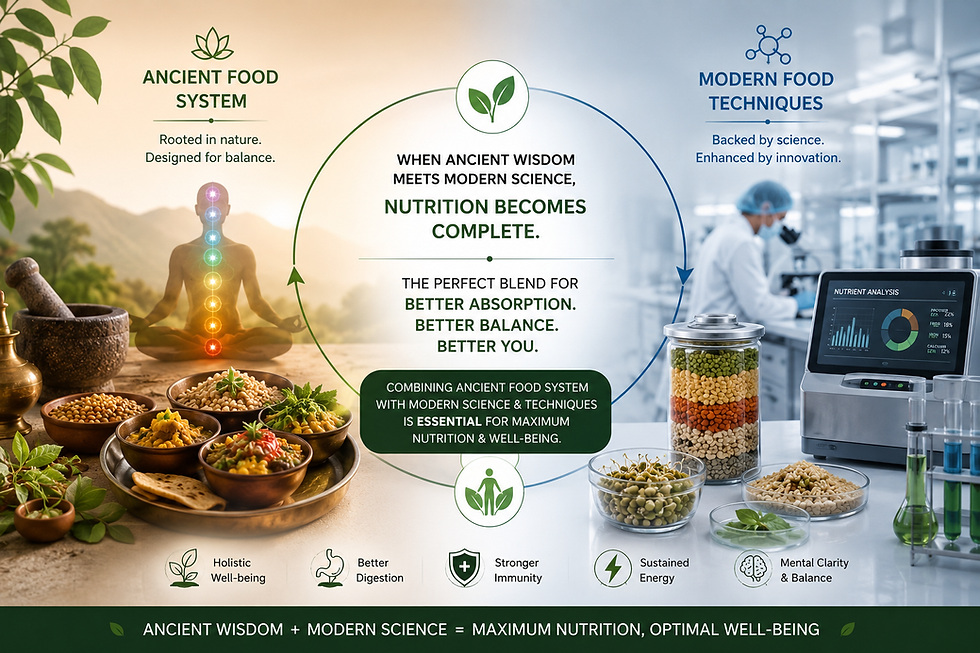
Long before the emergence of nutritional laboratories and clinical studies, traditional systems such as Ayurveda recognized the importance of food compatibility, digestion, balance, and individual constitution.
The concept of Sattvic nutrition emphasizes fresh, minimally processed, plant-based foods that support harmony between body and mind. The focus is not merely on consuming ingredients but on creating balance and supporting overall well-being.
Today, modern research increasingly validates many of these principles by demonstrating how food combinations influence nutrient absorption, gut health, and metabolic function.
The Science of Food Synergy
Modern nutritional science highlights the importance of "food synergy"—the idea that certain foods work better together than separately.
Examples include:
Nutrient pairings that improve mineral absorption
Combinations that enhance antioxidant utilization
Food preparations that reduce absorption barriers
Dietary patterns that support a healthy gut microbiome
Research also demonstrates that dietary fibers, prebiotics, and polyphenols found in plant foods help nourish beneficial gut bacteria, contributing to overall digestive and metabolic health.
This growing body of evidence suggests that maximizing the benefits of plant foods requires more than simply increasing consumption. It requires understanding how foods interact within the body.
A Personal Learning Journey
During my own health challenges associated with chronic kidney disease (CKD), I became increasingly interested in understanding how nutrition works beyond nutrient labels.
Blood reports occasionally indicated that certain nutrient levels were within range, yet questions remained about absorption, utilization, and overall nutritional efficiency.
This experience encouraged deeper exploration into both traditional food wisdom and modern nutritional science. It became evident that achieving nutritional balance often depends not only on what we eat, but also on how effectively the body can use those nutrients.
The Millvana Perspective
At Millvana, our approach is guided by a simple belief:
Ancient foods and modern science are most powerful when they work together.
Traditional grains, nuts, seeds, fruits, and plant-based ingredients offer incredible nutritional potential. Modern nutritional science helps us understand how ingredient selection, preparation, and combinations can help unlock that potential more effectively.
Rather than viewing traditional wisdom and scientific research as separate paths, we see them as complementary tools that can help people make more informed food choices.4
Looking Forward
The future of nutrition is unlikely to be found in a single superfood, trend, or dietary philosophy.
Instead, it may lie in thoughtfully combining centuries of traditional food knowledge with the insights of modern nutritional science.
When ancient wisdom meets evidence-based understanding, plant-based nutrition can become more balanced, more effective, and more meaningful.
At Millvana, this ongoing exploration continues to inspire how we think about food, wellness, and nourishment.
Disclaimer: This article is intended for general informational purposes only and does not constitute medical advice, diagnosis, or treatment. Please consult qualified healthcare professionals for individualized dietary or health recommendations.


Comments