Food is not just chemistry. It is science, tradition, art, engineering, and commerce working together.


Food Science: Where Ancient Wisdom Meets Modern Innovation
Food Is More Than What We Eat
Food nourishes our bodies, shapes our health, supports economies, and reflects cultures. Behind every nutritious meal lies an intricate combination of science, engineering, art, agriculture, and commerce.
Food science is often misunderstood as simply adding preservatives or processing ingredients. In reality, it is an interdisciplinary field dedicated to ensuring that food remains safe, nutritious, enjoyable, accessible, and sustainable from farm to fork.
As the world's population moves toward nearly 10 billion people by 2050, food science has become one of humanity's most important disciplines.
What is Food Science?
Food science combines several scientific disciplines:
Food Chemistry
Food Microbiology
Food Engineering
Nutrition Science
Biotechnology
Sensory Science
Packaging Technology
Food Safety
Quality Assurance
Its objective is simple:
To convert agricultural produce into food that is safe, nutritious, stable, affordable, and enjoyable.
Without food science, many everyday foods—including milk, yogurt, cheese, frozen vegetables, breakfast cereals, snacks, breads, edible oils, and beverages—would not have the quality or shelf life consumers expect.
Food Engineering: Feeding Millions Safely
Food engineering applies engineering principles to food manufacturing.
Modern technologies include:
Pasteurization
Sterilization
Dehydration
Freeze drying
Vacuum drying
High Pressure Processing (HPP)
Cold chain logistics
Modified Atmosphere Packaging (MAP)
These innovations reduce microbial growth, minimize food waste, preserve nutrients, and extend shelf life while maintaining product quality.
According to the United Nations Food and Agriculture Organization (FAO), nearly one-third of all food produced globally is lost or wasted, highlighting the need for better preservation and supply-chain technologies.
Sensory Science: Why We Eat With All Our Senses
Consumers rarely choose food based on nutrition labels alone.
Food choices are strongly influenced by sensory perception.
Sensory science studies how humans evaluate food using:
Vision
Aroma
Taste
Texture
Sound
A crisp snack, the aroma of roasted spices, vibrant vegetables, and an attractive presentation all influence perceived freshness and satisfaction.
Research in consumer behaviour consistently shows that visual presentation and aroma significantly affect appetite, purchasing decisions, and overall eating experience.
Ancient India Understood Food Science Differently
Long before modern laboratories existed, Indian traditions approached food holistically.
Ayurveda viewed food as both Aushadha (medicine) and Anna Prana (life force).
Rather than counting calories, foods were evaluated according to:
Digestibility
Seasonal suitability
Individual constitution (Doshas)
Preparation methods
Energetic properties
Meals were intentionally designed to stimulate all senses before eating.
Colour (Rupa)
Natural colours represented vitality and freshness.
Aroma (Gandha)
Traditional spices such as cumin, coriander, ginger, and fennel stimulate digestive secretions even before eating begins.
Texture (Sparsha)
Texture influences satiety, chewing time, and digestive comfort.
Taste (Shad Rasa)
Ayurveda recognises six tastes:
Sweet
Sour
Salty
Bitter
Pungent
Astringent
Balanced meals traditionally incorporated multiple tastes to support overall health.
Modern nutritional science increasingly recognises that eating behaviour involves neurological, hormonal, and sensory responses beyond simple calorie intake.
Improving Nutrition Through Food Science
Food scientists continuously work to improve public health through innovation.
Examples include:
Micronutrient fortification
Sodium reduction
Sugar reduction
Healthier fats
Plant-based proteins
High-protein foods
Fibre enrichment
Functional ingredients
Clean-label formulations
Today's consumers increasingly seek foods with shorter ingredient lists, recognisable ingredients, and minimal processing while maintaining convenience.
Sustainability and Food Waste
Food science plays an essential role in sustainability.
Innovations include:
Eco-friendly packaging
Renewable materials
Upcycled ingredients
Precision processing
Improved storage technologies
Water-efficient manufacturing
Energy-efficient processing
Reducing waste throughout the supply chain benefits both the environment and food affordability.
The Business of Food
Food is also one of the world's largest industries.
The global food and beverage market exceeds US$8 trillion, supported by agriculture, manufacturing, logistics, retail, hospitality, and digital commerce.
The modern food value chain includes:
Agricultural production
Ingredient processing
Manufacturing
Packaging
Distribution
Retail
Food service
E-commerce
Consumer engagement
Value addition occurs at every stage through innovation, branding, quality assurance, convenience, and nutrition.
Consumer Trends Driving the Future
Current market research highlights several long-term trends:
Growing demand for clean-label products
Rising interest in plant-based nutrition
Functional foods for immunity and gut health
High-protein snacks
Sustainable packaging
Transparency and ingredient traceability
Regional and traditional grains such as millets
Reduced sugar and minimally processed foods
Consumers increasingly expect products that deliver both health benefits and enjoyable eating experiences.
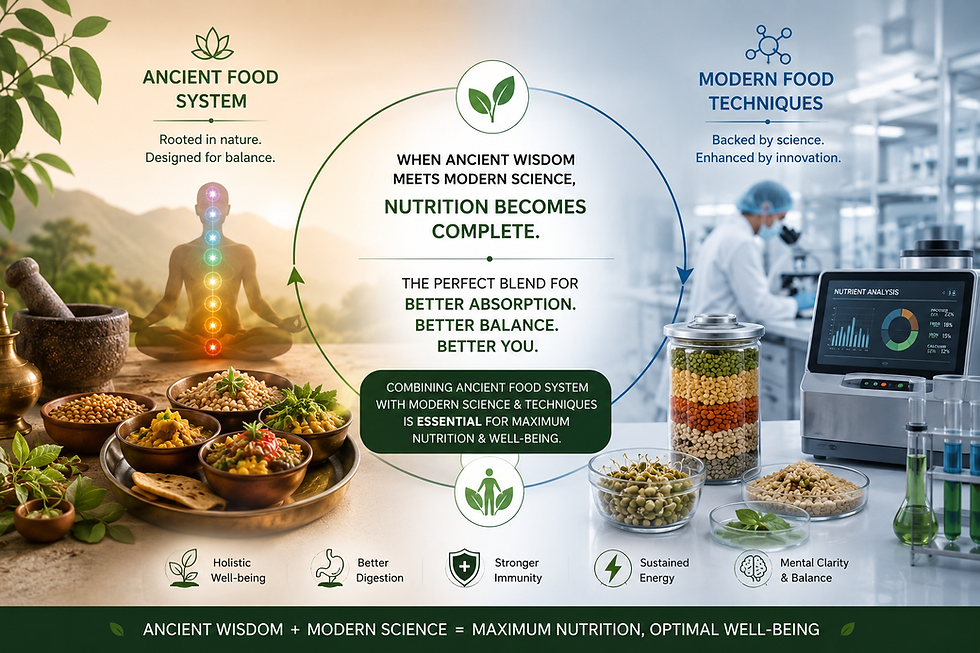
The Future of Food Lies in Balance
The future of food is unlikely to be driven solely by technology or solely by tradition.
Instead, it lies in combining:
Scientific research
Responsible engineering
Traditional knowledge
Sustainable agriculture
Sensory excellence
Transparent nutrition
Modern food science and ancient food wisdom are not competing philosophies—they complement each other.
At Millvana Nutrition, we believe the next generation of food should respect both evidence-based science and time-tested traditions, creating products that are clean, nutritious, enjoyable, and sustainable.
After all, the best food doesn't simply satisfy hunger—it nourishes people, communities, and the future.


Comments